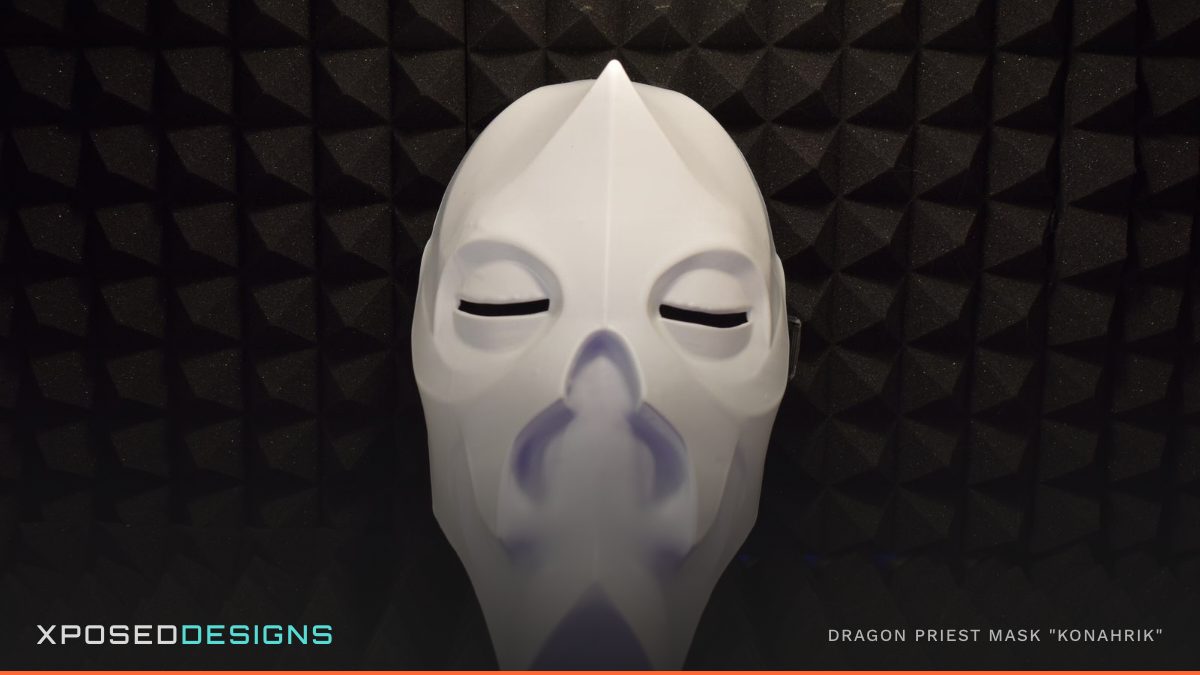
Dragon Priest Mask Cosplay: From Raw Kit to Convention-Ready
Most of our content covers full-body power armor and torso kits, but the Dragon Priest Mask is one of our most requested single-piece builds, and it deserves its own guide. It's a compact, high-impact project: one piece, a focused paint job, and a result that reads immediately at any convention or Halloween gathering where fantasy and RPG cosplay show up.
This guide covers what makes the Dragon Priest Mask a good build target, what the raw kit gives you, and how to approach the paint job that turns a plain vacuum-formed shell into a finished mask.
What the Dragon Priest Mask Is (and Why It's a Different Kind of Build)
The Dragon Priest Mask is modeled on the ancient, feared masks worn by the ruling priesthood in Skyrim: brutal, angular designs, each one distinct, each tied to a named character (Konahrik, Hevnoraak, and a handful of others across the fandom). Unlike our power armor and combat armor kits, this is a single accessory piece rather than a multi-piece body build, which makes it approachable for builders who don't want to commit to a full suit but still want a strong, recognizable centerpiece for their cosplay.
We produce the mask as a raw kit: vacuum-formed using durable, lightweight High Impact Styrene rather than the thermoformed ABS used on our power armor line. That material choice matters for a mask specifically. Styrene is lighter than ABS, which is a meaningful comfort advantage for a piece that sits directly on your face and neck for a full day.
The raw kit ships as the plain, undetailed shell: no paint, no weathering, no hood. It's sold this way specifically for builders who want full creative control over their own paint job and finish, the same DIY philosophy behind our other unpainted kits.
Fitting the Mask Before You Paint
Before any paint goes on, confirm fit. The mask comes with a strap and fasteners, and getting the fit dialed in early avoids problems later.
Adjust the strap for comfort, not just security. A mask that's cinched too tight for a quick test will feel very different after three hours of wear. Test it the way you'd actually wear it: standing, talking, turning your head.
Check ventilation and visibility before committing to final assembly. The eye openings and any breathing gaps should be checked against your actual line of sight now, while it's easy to adjust the material with a heat-knife or soldering tool if fasteners need repositioning. High Impact Styrene is forgiving to work with this way, unlike more brittle plastics.
Decide on a hood or base layer now. The mask doesn't include a hood. If your build calls for one, a simple fabric or fitted cowl underneath gives the mask a finished transition point at the neck and hides the edge of the shell. Plan the hood fabric and color before you start painting, since it affects how you approach weathering at the mask's lower edge.
Painting the Dragon Priest Mask
The general painting process is the same one covered in detail in our ABS painting guide; clean the surface with isopropyl alcohol, base coat, detail work, weathering, seal. A few things are specific to this piece.
Metallic base coats are the default choice. The masks are canonically ancient, ornate metal artifacts, closer in character to weathered bronze, iron, or gold ceremonial armor than to painted cloth or leather. A metallic spray base (gunmetal, antique bronze, or a dark iron tone depending on the specific mask you're building) gives you a strong foundation to weather on top of.
Deep recessed detail rewards a dark wash. Like our thermoformed power armor pieces, the vacuum-formed detail on the mask holds panel lines and carved-in texture cleanly. A heavily thinned dark wash, applied and then wiped back from the raised surfaces, pools naturally into the deep recesses and brings out detail that's easy to miss on a flat, single-color paint job.
Edge highlighting sells the "ancient artifact" read. Dry brush a lighter metallic tone (gold, brass, or a warm silver depending on your base) along the raised edges and ridges. This is the same dry-brushing technique used on power armor edge wear, and it does the same job here: it mimics light catching worn, aged metal, which is exactly the read you want on a mask meant to look centuries old.
Consider a two-tone finish for named-mask accuracy. Both Konahrik and Hevnoraak (and the broader family of masks in this line) feature distinct color and detail variations from each other. If you're building toward a specific named mask, gather reference images before you start and mask off the color transitions carefully, the same masking technique covered in the painting guide for two-tone armor pieces.
Seal it. A matte or satin clear coat protects the finish and, for a mask specifically, holds up against the oils and handling that come from being worn directly against skin and hair over a long day.
Wearing the Mask for a Full Event
A few practical notes that are specific to face-worn pieces rather than body armor:
- Talking and eating are harder with a full mask than with a chest plate. If your event involves either, plan for it; some builders add a small hinge or plan to remove the mask for extended conversation or meals.
- Heat and moisture build up faster on a face-worn piece than on body armor, since your breath is right there. The lighter styrene material helps compared to a heavier build, but breaks are still worth planning into a long day.
- Pack it carefully for travel. A mask's dome shape and fine detail are more vulnerable to crushing than a flat chest plate. Our storage and transport guide covers packing helmets and masks specifically, including filling the interior cavity with tissue to hold its shape in transit.
Why a Single-Piece Build Is a Smart Entry Point
If you're weighing whether to start with a full suit or something smaller, the Dragon Priest Mask is a genuinely good answer. Our beginners guide makes the case that a single, well-executed piece beats a half-finished full suit, and a mask is about as focused a first project as cosplay armor gets: one shape, one paint job, one clear finish line.
Browse the Dragon Priest Mask kit and the rest of the lineup at xposeddesigns.com/collections/all. If you have questions about fit or paint approach for a specific named mask, reach out; we're happy to help you plan it out before you start cutting straps.
Building your own Dragon Priest Mask? Share progress photos in the comments, we'd love to see it. Follow @XposedDesignsLLC on Instagram for weathering and paint technique walkthroughs.